
How to Reduce Cart Abandonment and Recover the Revenue You're Losing
Jennifer Foster · July 21, 2026
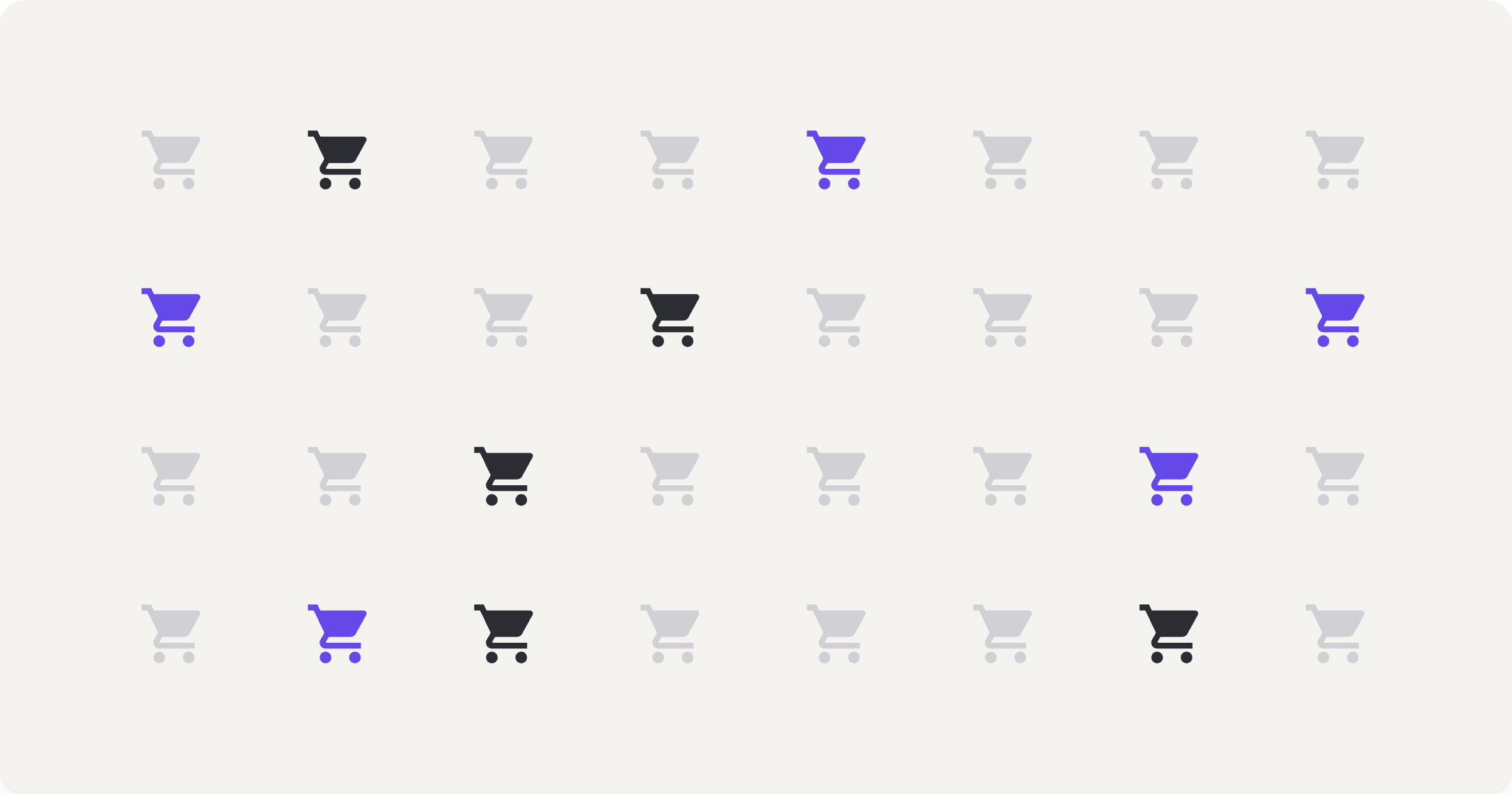
Shoppers are leaving carts behind at a record 72.32% in 2026. That’s the highest rate Uptain has ever tracked across 30 million shoppers and 3,000+ stores.
To reduce cart abandonment, focus on the things you can control. Surprise costs. Forced accounts. Long checkout forms.
Then use email and SMS to recover the carts you couldn't prevent.
But those flows only reach shoppers your ESP can see. And that's fewer than you think.
Key Takeaways
Carts abandon at a record 72% in 2026, and 43% of those shoppers were only browsing
Surprise costs are the top fixable reason, driving 39% of checkout abandonment
Few strategies to fix your abandonment rate like reducing checkout friction, building trust at checkout and recovering shoppers who abandon at the right time can be a game changer for your brand
Mobile abandons at 80% versus 66% on desktop, and many of those shoppers finish on another device
Recovery beats prevention: abandonment emails hit ~45% open rates when sent within the hour
Your ESP only sees a fraction of abandoners; identity resolution finds 70–150% more
Before we get into how to reduce cart abandonment, it helps to understand what causes shoppers to leave in the first place.
What Causes Cart Abandonment?
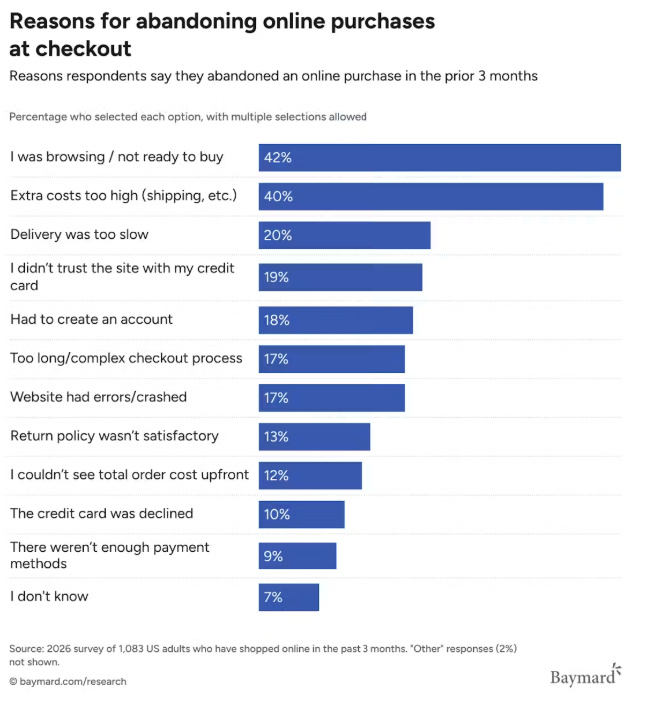
Surprise costs at checkout cause more abandonment than anything else. 39% of shoppers who abandoned a checkout said it was because of unexpected shipping, taxes, or fees.
Baymard Institute's latest survey also pointed out a few other fixable reasons.
Shoppers love a speedy delivery. Slow delivery dates drove 21% of abandonment.
Shoppers guard their card details. 19% didn't trust the site with their credit card information.
Shoppers don't want a relationship yet, they want their stuff. Another 18% walked rather than create an account.
And a long checkout gives shoppers time to talk themselves out of it. 17% left because it felt too long or complicated.
Every one of those is friction the store created. The shopper found the product, wanted it, and started checking out. The store lost them.
Why Is the Cart Abandonment Rate So High?
Most of the 72% of shoppers who abandon were never going to buy in the first place.
43% of shoppers who abandoned a cart told Baymard they were browsing and not ready to buy. The cart is their wishlist. They compare across tabs, waiting for payday. And if they're savvy, they're using their cart to watch for the item to go on sale.
That browsing behavior is what makes online shopping so fun. It's why Baymard puts the floor for even a perfect checkout around 55 to 60%.
So you're going to live with some loss. Fix your fees, your forms, and your mobile flow, and you'll still lose carts.
That's not a reason to skip the fixes. It's the reason recovery matters as much as prevention.
Reduce Checkout Friction
Checkout friction is everything standing between "add to cart" and "paid." Four fixes remove most of it. We’ll start with the biggest threat of them all:
1. Show total costs before checkout.
Shipping, taxes, and fees are visible from the product page onward. Try a persistent banner that lets the shopper know where they stand on costs. For example: "You're $12 away from free shipping." The banner does double duty: it removes the cost surprise and lifts average order value at the same time.
A few more ways to kill the surprise:
Put a shipping estimator in the cart. A zip code field that returns real rates and dates beats "calculated at checkout". Ohhh boy, the phrase that precedes most rage-quits.
Go flat-rate if your margins allow it. "$5 shipping on everything" is a price a shopper can do in their head from the product page.
Bake shipping into the price for cheap-to-ship items. "$34 with free shipping" converts better than "$29 plus $5 shipping" even though the math is identical. Shoppers punish the fee, not the total.
Show duties and taxes upfront for international orders. A surprise customs bill at the door doesn't squash the sale, it kills the reorder.
2. Make guest checkout the default.
Forced registration drives roughly a fifth of abandonment. When brands remove registration, they recover up to 20% of abandoned carts. Let people buy first. Invite them to create an account after the money changes hands.
3. Cut your checkout form in half.
The typical checkout has 11.3 form fields. Baymard’s testing shows 6 to 8 fields is enough. Every extra field is a small exit door.
Must-haves: an email address, a shipping address, and payment details. Everything else should default or disappear. Billing address copies from shipping. Phone number is optional. Account creation waits until after the purchase. Have one-click options like Shop Pay, PayPal, and Apple Pay. This way returning shoppers never re-type anything.
4. Treat mobile as your primary checkout.
Mobile shoppers abandon at 80%, versus roughly 66% on desktop per Dynamic Yield's live benchmark. Typing is the tax. Bigger tap targets, autofill support, and express payment buttons matter most.
Plenty of mobile abandoners aren't leaving at all. They're headed to a bigger screen to buy. Think about the last plane ticket you bought. You found the flight on your phone. Then you grabbed your laptop to book it. Nobody wants to type traveler details with their thumbs. That shopper didn't abandon. They relocated. But when they land on desktop, most stores don't recognize them. The cart looks empty, no flow fires, and a sale that was minutes away starts over from zero.
Hold onto that shopper. We'll meet them again.
Build Trust at Checkout
Shoppers abandon when the payment step feels riskier than the product is worth. Baymard's survey found 19% of abandoners didn't trust the site with their card details.
These fixes are more technical:
Show recognizable payment marks at the point of payment. Visa, Mastercard, PayPal, Shop Pay. A shopper who has never heard of your brand has heard of those.
Put your return policy where the hesitation happens. A one-line "Free returns within 30 days" next to the buy button answers the post-purchase regret question before it's asked. Burying it in the footer answers nothing.
Keep reviews visible through checkout. Star ratings and review counts on the cart page remind shoppers that other people bought this and kept it.
Fix your load times. A checkout that stutters looks sketchy even when it's just slow. Test on a mid-range phone over cellular, because that's where many of your customers are.
None of this requires new tools. Most of it is moving information you already have to the place doubt actually occurs.
Recover Shoppers who Abandon Anyway
This is to help with the abandoners who gave you their contact info. The abandoned cart email remains some of the highest-performing email you can send. Roughly 45% open rates and about 15% of reached shoppers recovered when sent within the hour.
A three-message sequence covers the common reasons people left:
The reminder, within an hour. No discount. The abandoned cart, the product image, and link back to the cart. Many abandoners were interrupted, and this is all they need.
The objection-handler, at 24 hours. Answer the question that stalled them: shipping cost, return policy, sizing. This is where your trust content earns a second life.
The incentive, at 48 to 72 hours, if you use one at all. Hold the discount to the last message. Offer it first and you teach your best customers to abandon on purpose.
SMS follows the same logic on a faster clock. A text sent within 30 minutes beats an email an hour later. The list for SMS is smaller, so treat it as a layer on top of email rather than a replacement.
1. Retarget Cart Abandoners With Paid Ads
Email and SMS are not the only ways back into an abandoned cart. Retargeting ads follow shoppers onto platforms like Instagram, Facebook, Google, and other sites, reminding them about the products they considered after they leave.
But the best retargeting ads do more than repeat the same product image. They show how the product directly solves the problem that brought the shopper to the site in the first place.
Message based on where they dropped off.
The trick is to address the reason the shopper may have hesitated. You will not always know that reason with certainty, but the point where they dropped off gives you clues.
When a shopper exits from the product page.
A shopper who exits from the product page may need more education, proof, or help understanding what makes the product different.When a shopper leaves after shipping is calculated.
Someone who leaves after seeing shipping costs may need a clearer value story or a free-shipping message.When a shopper leaves after the payment step.
A shopper who reaches the payment step may need trust signals, flexible payment options, or reassurance about returns.When a shopper leaves without an obvious point of friction.
They may simply have been distracted. Show them the exact product again or create urgency when inventory or an offer is about to expire.
Dynamic ads can show each shopper the exact product they left behind, while segmented campaigns can respond to the objection most likely to have stalled the purchase:
Retargeting is also an opportunity to keep educating after the shopper leaves. When the ad connects the shopper’s problem directly to your solution, it stops feeling like a reminder and starts feeling like the answer they were looking for.
But retargeting has the same weakness as abandonment email: it only works when the platform recognizes the shopper. Cookies expire. Devices change. Browsers restrict tracking. A shopper can abandon on their phone and return on a laptop as a complete stranger.
Retargeting gives you another recovery channel. Identity resolution determines how many abandoners that channel can actually reach.
2. Use Exit-Intent Offers
Exit-intent popups catch a shopper heading for the close button. They do two jobs. The first is saving the sale on the spot. A nudge, a free-shipping reminder, or a quick "Need help deciding?" The second job is quieter and more valuable: capturing an email you didn't have. That turns an anonymous abandoner into someone your flows can reach.
One caution. Lead every popup with a discount and repeat visitors learn to abandon on purpose. Save the discount for first-time visitors or high-value carts. Test an email-capture-only version. The offer you don't make is sometimes the more profitable one.
Exit-intent is the last tactic here that works on shoppers you can watch leave. Everything after this is about the ones you never saw.
3. Most of Your Abandoners Never Enter Your Flow
Your recovery flows are skipping people on your own list. That sounds wrong, I know. These are subscribers. They opted in. You paid to reach them.
But walk through what actually happens. A subscriber lands on your site, adds something to a cart, and leaves. Klaviyo looks for a profile match on that session and comes up empty. The flow stays quiet. And it comes up empty for the most boring reasons. Their cookie expired, since Klaviyo's only lasts about 7 days. Or they're on their phone and you know them from their laptop. An ad blocker ate the cookie. They weren't logged in.
This happens more than you'd guess. Across the brands we measured, having identity resolution surfaced 30% to 150% more cart abandoners than the ESP caught on its own. [Retention.com internal data, 2026].
But walk through what actually happens. A subscriber lands on your site, adds something to a cart, and leaves. Klaviyo looks for a profile match on that session, comes up empty, and the flow stays quiet. And it comes up empty for the most boring reasons. Their cookie expired, since Klaviyo's only lasts about 7 days. Or they're on their phone and you know them from their laptop. An ad blocker ate the cookie. They weren't logged in.
Remember our plane-ticket shopper? This is where they went missing.
These aren't strangers. They showed up with a cart, ready to go. The flow couldn't see them.
4. How Many of Your Abandoners Can You Actually See?
With two numbers, you can measure how many abandoners your flows actually see:
Count last month’s abandoned checkouts. In Shopify, go to Orders, then Abandoned checkouts.
Count how many profiles entered your abandonment flows over the same period. In Klaviyo, open your Abandoned Checkout flow. Trigger is Shopify's Checkout Started event.
Divide the Klaviyo number by the Shopify number.
That percentage is your visibility. If 100 people abandoned checkout and 28 entered your flow, the other 72 walked away. Most brands running this audit for the first time expect a small gap and instead find a canyon.
And the gap is widening on its own, for two reasons.
Apple's WebKit tracking prevention caps cookie lifespans. Shoppers turn anonymous again in as little as a week.
AI search is sending you a new wave of high-intent visitors. They arrive with no history at all. Adobe measured AI-sourced traffic growing 393% year over year in Q1 2026. Those visitors convert 42% better than average. More of your best traffic is anonymous than ever.
5. How to Find the Abandoners Your Flows Can't See
Identity resolution puts a name back on shoppers your cookies forgot. These are people who already opted in. Retention.com spots the cart abandoners your ESP lost track of. Then it feeds them into Klaviyo to hit them with the abandonment flow messaging you already run. It doesn't replace Klaviyo. It doesn't ask you to build anything new.
This is also where our plane-ticket shopper gets found. They abandoned on their phone and came back on a laptop Klaviyo didn't recognize. Cross-device recognition connects those two sessions to one subscriber.
Now run the math on a typical month.
Say 1,000 people add to cart. Klaviyo's cookies identify around 180 of those abandoners. At the 15% industry benchmark recovery rate, about 27 come back and buy.
Add Retention.com and you can reach another ~180 abandoners Klaviyo couldn't see.
Same flow. Same 15% recovery rate. Recovered purchases go from 27 to 54.
Your abandonment rate didn't move. The only thing that changed is how many abandoners you could see. Recovery rate is a multiplier; visibility is the number it multiplies.
What This Looks Like in Real Accounts
Brands recover this hidden revenue without touching their flows. Three did the same thing: they copied the abandonment flows they already ran and let Retention.com feed more shoppers into them.
MUD\WTR was losing abandonment events that Klaviyo and Elevar both missed. They copied their existing abandonment flows into Retention recovery flows and changed nothing else. No new email, no new creative. That drove $100K+ in incremental revenue at a 15x ROI. Their Director of Digital Product: Retention "captures abandonment events that are being missed by both Klaviyo and Elevar. See exactly which flows they copied and how they split the attribution: Read the MUD\WTR story.
Unbound Merino is a travel apparel brand that had a lot of engaged visitors browsing anonymously, with no way to follow up. Retention.com’s abandonment recovery identified those known shoppers and re-engaged them through flows already running. The result was 37% more revenue in the first three months, over $1M in incremental revenue, and a 54x ROI. In 2025 it added another 42% to their native flows. See how a 54x ROI held up over two years: Read the Unbound Merino story.
Montana Knife Company sells limited drops that go out of stock fast, so a lot of traffic arrives too late and leaves. Retention.com fed those shoppers into their Klaviyo and SMS flows, generating $2.5M+ in revenue at a 34.6x ROI. See how they turned sold-out drops into 670K new contacts: Read the Montana Knife story.
How it works: Retention.com’s abandonment recovery tool recognizes a shopper who abandons a cart. It sends that event to Klaviyo. The event triggers a copy of your existing flow. Same sequence, same brand voice. The tool only steps in for shoppers who would otherwise get nothing.
You've already built the flows. You're already paying for the traffic. The only thing missing is the shoppers your ESP can't see. Book a demo and we'll show you how many abandoners you're leaving on the table.
Frequently Asked Questions
What is a good cart abandonment rate?
A good cart abandonment rate is anything below 70%, which beats the 2026 average of 72.32%.
What is abandoned cart recovery?
Abandoned cart recovery brings back shoppers who left without buying. It's an automated email or SMS reminder, triggered when a shopper abandons a cart. It only works for shoppers you can identify.
Do abandoned cart emails still work?
Abandoned cart emails still work, better than almost any other email you send. Expect open rates near 45%. Expect around 15% of reached shoppers to buy when the first send lands within an hour. The limit is how many abandoners receive an email.
Does Retention.com replace Klaviyo?
Retention.com does not replace Klaviyo. It feeds Klaviyo. It re-recognizes opted-in shoppers Klaviyo lost track of, including cart abandoners. Then it sends them the abandonment messaging you already run in Klaviyo. Retention.com widens who enters your abandonment flows.